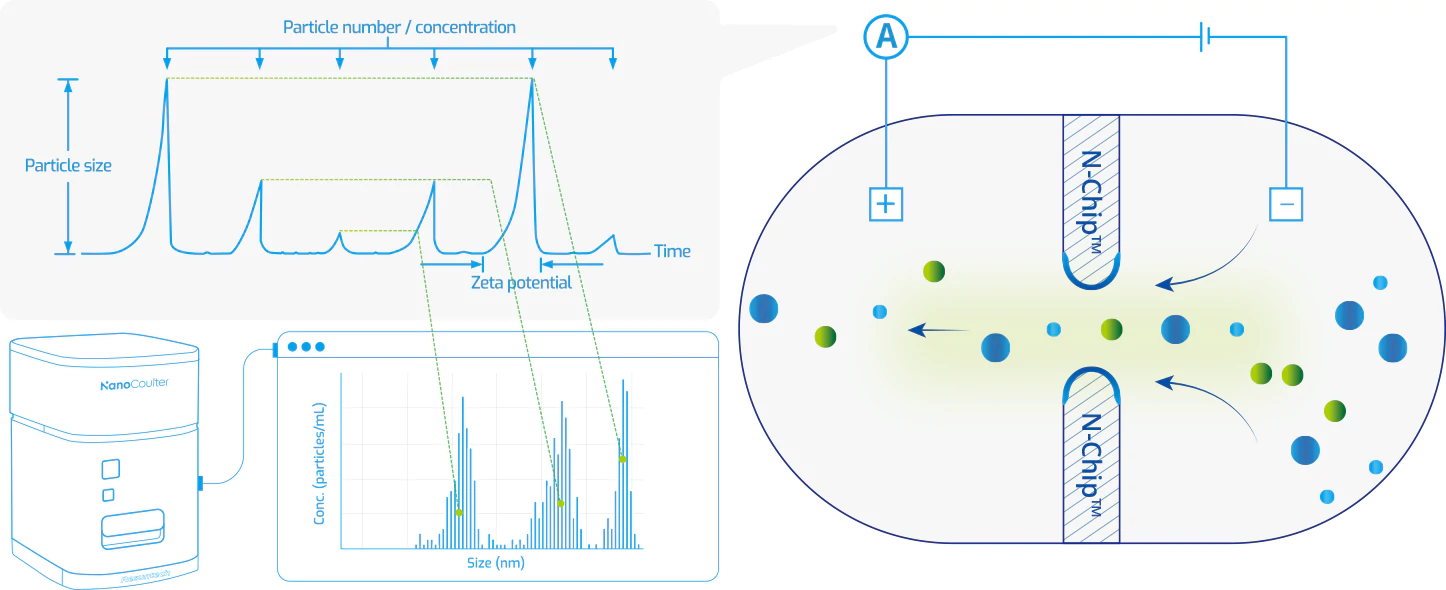
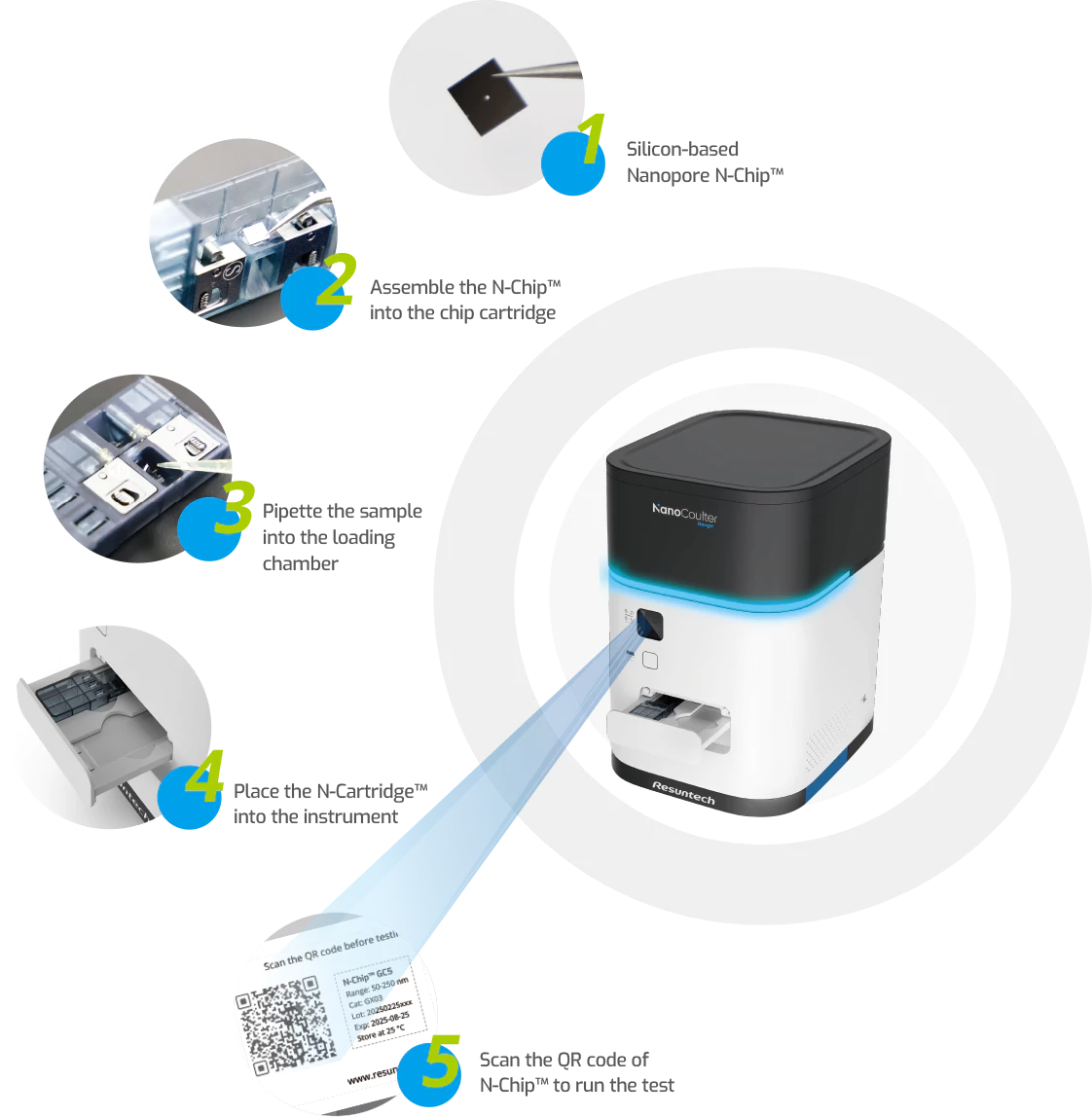
NanoCoulter™ employs the resistive pulse sensing (RPS, also known as Coulter) principle. When the voltage is applied, as each particle passes through the nano-aperture of the NanoCoulter™ N-Chip™, it causes a resistance change and generates a potential pulse. NanoCoulter™ accurately analyzes these pulses to obtain multi-dimensional data, including particle size, concentration, and zeta potential, etc.
Engineered for researchers and quality control professionals across diverse industries, NanoCoulter™ instruments offer unparalleled accuracy, precision, and reproducibility, delivering real-time insights into multidimensional particle analysis. From biopharmaceuticals to advanced materials and environmental science, NanoCoulter™ empowers your laboratory with cutting-edge technology—accelerating discoveries, optimizing processes, and unlocking new frontiers in nanoparticle analysis.
How It Works?
Why Choose NanoCoulter?
Ture Particle-by-particle Detection
Precise analysis of polydisperse or heterogeneous samples as each particle passes through the nano-aperture.
Ture Particle-by-particle Detection
Precise analysis of polydisperse or heterogeneous samples as each particle passes through the nano-aperture.
Super Accuracy and Precision
Highly linear concentration measurements (R²> 0.999) and consistently low CV% across all tests.
High Resolution and Sensitivity
1 nm particle size resolution for high-precision applications - comparable to TEM.
True-to-sample Results
Unaffected by optical properties of particle, delivering non-fitted, highly accurate data reflecting the true state of samples.
Easy to use
Pre-calibrated chips with simple, maintenance-free operation and user-friendly software. No washing, clogging, or calibration needed.
Beyond the Limits of Optical DLS and NTA
1:1:1 mix of CRM particles
100/150/200 nm
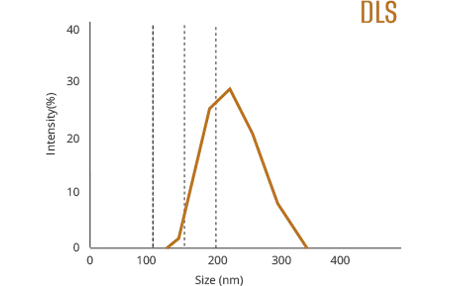
DLS cannot accurately measure polydisperse samples, causing size deviations and failing to determine particle concentration.
1:1:1 mix of CRM particles
100/150/200 nm
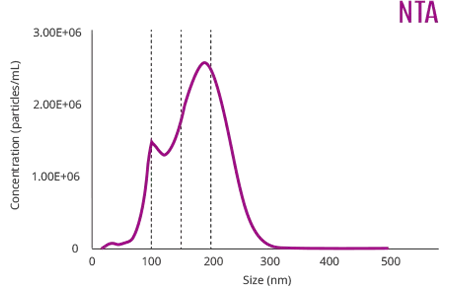
NTA could discern the bimodal mixture but not the trimodal or quadrimodal mixture.
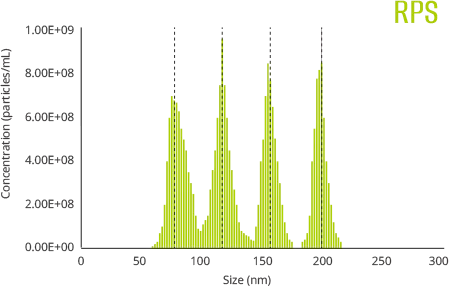
1:1:1:1 mix of CRM particles
80/120/160/200 nm
RPS differentiates multimodal mixtures with high resolution, measuring actual diameter without prior particle knowledge.
AAVs are promising gene therapy vectors due to their small size and favorable safety profile. However, accurately characterizing these sub-50 nm particles remains a major technical challenge in the field.
Recently, NanoCoulter™ has gained growing recognition in exosome research, with multiple studies validating its analytical strengths. Below are highlights from several key publications.
In the fields of nanotechnology and materials science, particle size distribution (PSD) is a critical parameter that directly influences the performance and applicability of nanomaterials. Two of the most commonly used indicators to evaluate PSD are the Polydispersity Index (PDI) and the SPAN value. While often used interchangeably, these two metrics differ significantly in how they are calculated and interpreted. Understanding the distinction between PDI and SPAN is essential for accurate particle characterization.