NanoCoulter™ Deft can simultaneously measure the size and zeta potential of individual particles, with each size corresponding to a specific zeta potential.

Unparalleled Detection Performance
Single-Particle Zeta Potential Measurement
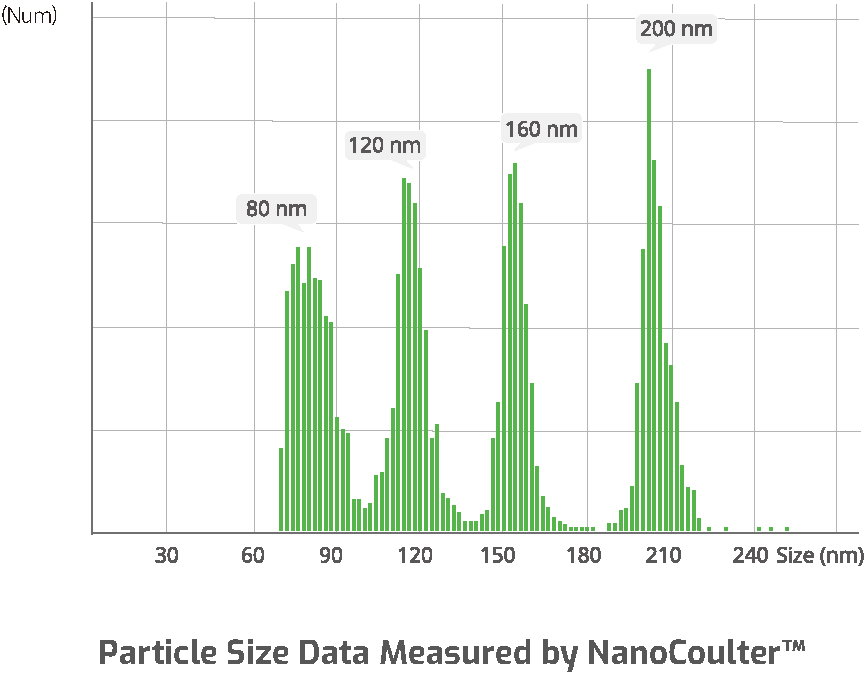
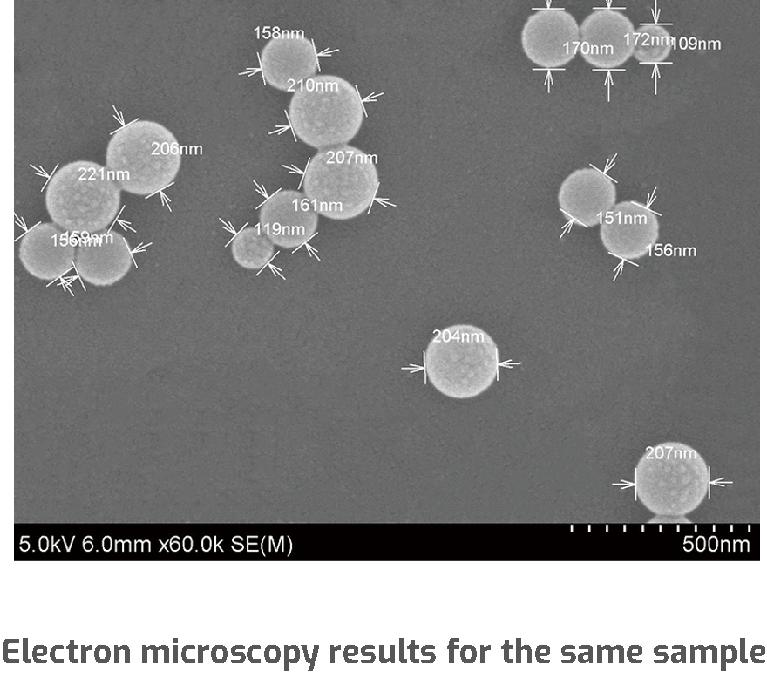
NanoCoulter™ measures both the particle size and size distribution of polydisperse samples, delivering EM-consistent results with exceptional accuracy and precision.
Single-Particle Zeta Potential Measurement
Zeta potential is an important indicator of the stability of dispersion systems. Under a constant electric field, the electrophoretic velocity of particles is directly proportional to the absolute value of their zeta potential. NanoCoulter™ measures the time it takes for particles to pass through a nanopore to obtain Zeta potential data, making it the only technology platform capable of simultaneously measuring single-particle size, Zeta potential, and concentration.


Related Cases
Nanodrug Surface Property Analysis


Quality Control for Lot-to-Lot Variability of Viruses.
Real-time monitoring of particle size and Zeta potential distribution for lentivirus, adenovirus, etc., enables precise assessment of batch-to-batch differences. This provides efficient support for process optimization and adjustment of production parameters, helping to improve viral production efficiency and stability.


Characterization of Microsphere Modification Process
Perform precise particle size and surface charge analysis on latex microspheres before and after antibody coating to intuitively reveal the aggregation status. This provides reliable data support for optimizing the coating process and dispersion treatment, thereby enhancing the stability of downstream experiments.


Latest Articles & News