
Characterization of Nanomaterials
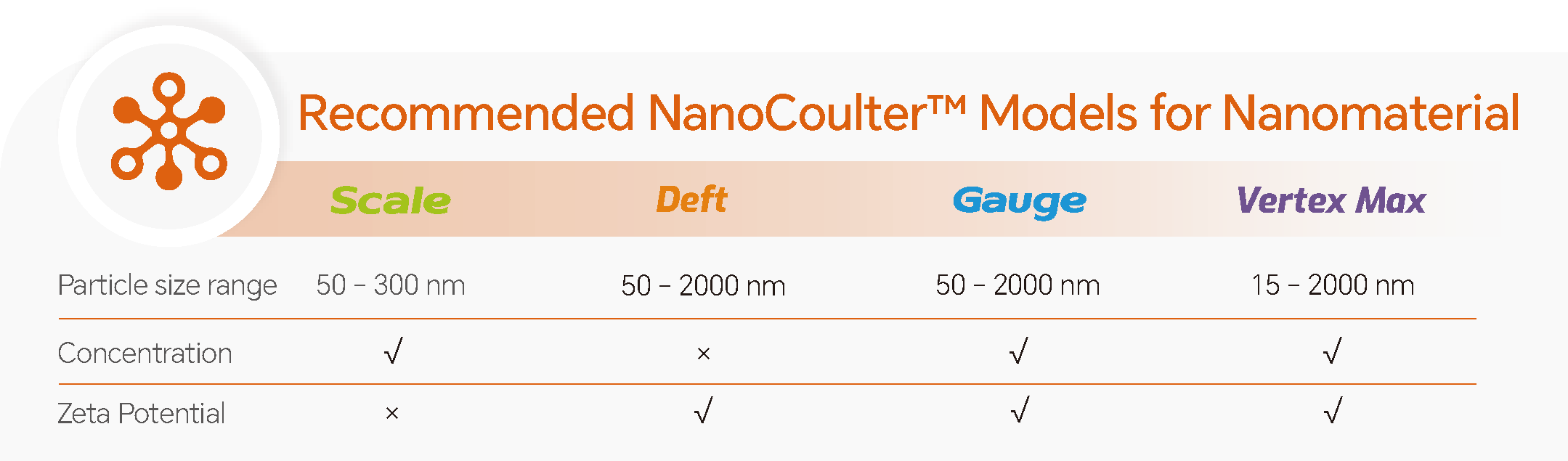
In the research and development of nanomaterials, the NanoCoulter™ single-particle analyzer can accurately measure particle size distribution, particle concentration, and zeta potential. It is particularly suitable for the characterization of surface-modified particles, polydisperse systems, and irregular particles. Compared with traditional optical methods, NanoCoulter™ provides more accurate and higher resolution results, offering strong data support for the optimization of nanomaterial preparation, stability evaluation, and quality control.
Detection of Agglomeration in Magnetic Nanoparticles
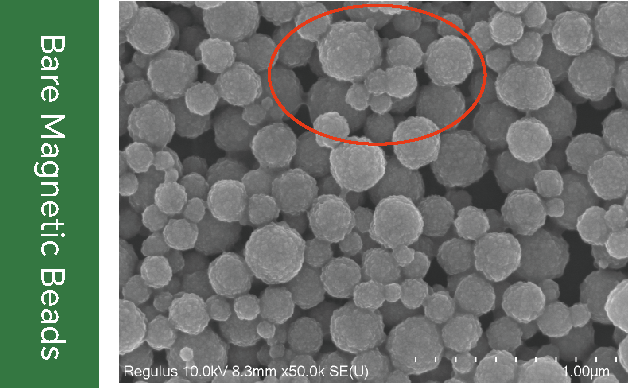
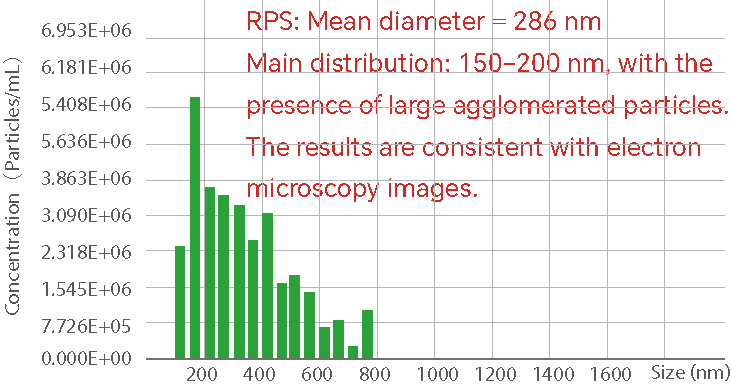
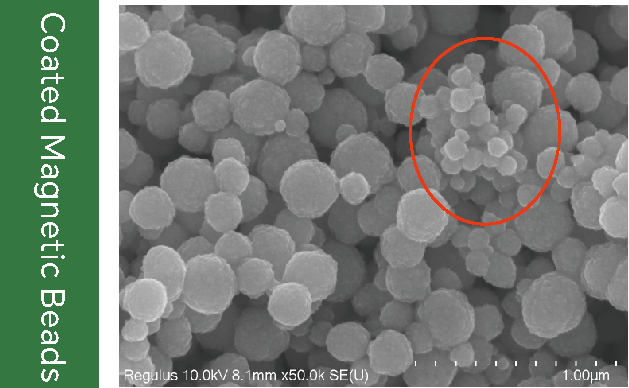
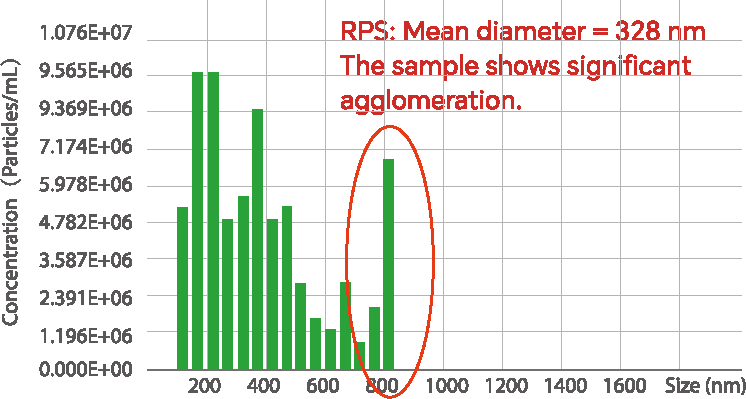
After surface coating, the properties of magnetic beads change, causing them to move closer to each other and form aggregates. The degree of agglomeration significantly affects downstream application efficiency. Therefore, it is essential to characterize the agglomeration level of the magnetic beads.NanoCoulter™’s single-particle, high-resolution detection enables accurate characterization of the agglomeration status in magnetic bead samples. The test results show that coated magnetic beads exhibit significantly higher levels of agglomeration, which is in excellent agreement with electron microscopy data.
Dispersion Analysis of Latex Microspheres
After antibody coating, latex microspheres often exhibit agglomeration, which can compromise the stability of downstream experiments. Therefore, proper dispersion treatment is required.
NanoCoulter™ enables precise analysis of particle size and surface charge (zeta potential) of microspheres before and after coating. It provides clear and intuitive visualization of agglomeration behavior, offering reliable data support for optimizing the coating process and dispersion conditions.


Microsphere Surface Engineering Analysis
Carboxyl content refers to the molar amount of carboxyl groups (-COOH) per unit mass or per unit surface area of the microspheres. It reflects the surface density of carboxyl groups and is a key parameter for evaluating the reactivity and binding capacity of the microspheres.A higher carboxyl content indicates more available binding sites on the microsphere surface, thereby improving conjugation efficiency with other molecules. As the carboxyl content increases, the absolute value of the zeta potential also increases.


MLCC Nano BaTiO₃ Slurry Particle Size Analysis
NanoCoulter™ single-particle analyzer can be used for the study of dispersion and storage stability of BaTiO3 slurries. It offers high data resolution and is highly sensitive in detecting particle size uniformity as well as the presence of a small number of large particles.


